Universitas Gunadarma’s Bachelor of Psychology Program Receives FIBAA International Accreditation

Accreditation is one of the efforts made by academic programs and higher education institutions to demonstrate their quality. The Psychology Bachelor’s Program at Universitas Gunadarma has already obtained national accreditation from BAN-PT with an A rating since 2023. The aim to improve the quality of higher education has led the study program to the Foundation for International Business Administration Accreditation (FIBAA) as the next step, in collaboration with the Communication Science Bachelor’s Program at Universitas Gunadarma.
The accreditation application process, preparation of the self-assessment report, site visit, and final accreditation status would not have been possible without the support of Prof. Dr. E.S. Margianti, SE, MM, Rector of Universitas Gunadarma; Dr. Ravi A. Salim S as Vice Rector I, Prof. Suryadi Harmanto, Ssi, MMSI as Vice Rector II, Dr. Irwan Bastian as Vice Rector III, and Prof. Dr. Didin Mukodim as Vice Rector IV, as well as Prof. Dr. A.M. Heru Basuki, MPsi. as Dean of the Faculty of Psychology at Universitas Gunadarma.
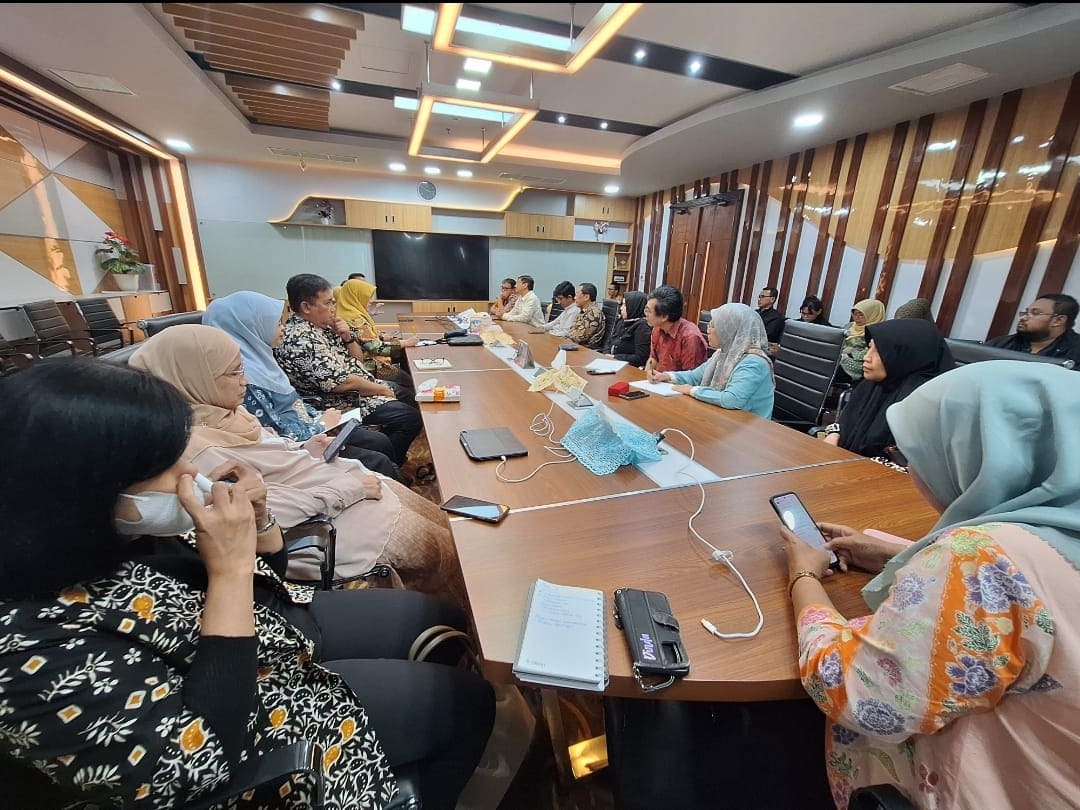
From the start of the accreditation application process to discussions with Bajamtu Universitas Gunadarma, with the assistance of Dr. rer. pol. Ir. Sudaryanto, M.Sc., IPU, and the Dean of the Faculty of Letters and Culture, Dr. Ichwan Suyudi, M.M., the visitation and assessment by the expert panel are scheduled to take place from September 24 to 26, 2024, with Yuliia Bleshmudt serving as the FIBAA Project Manager. The Expert Panel itself is divided into representatives from the field of science, namely Dr. Maria Ochwat and Prof. Dr. Simone Schuetz-Bosbach; Ute Beyer as a representative from professional practice; S. Rouli Manalu, Ph.D., as a representative from the country practice of Universitas Diponegoro, Semarang; and a student representative, Shana Korner.
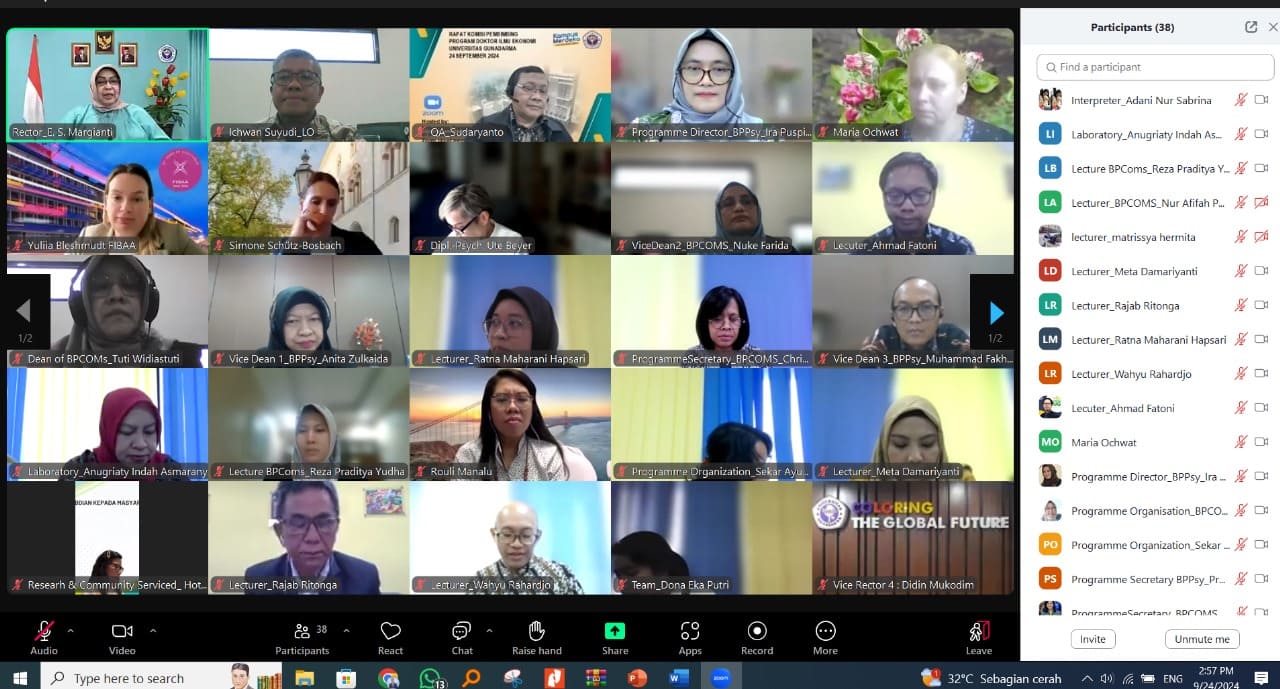
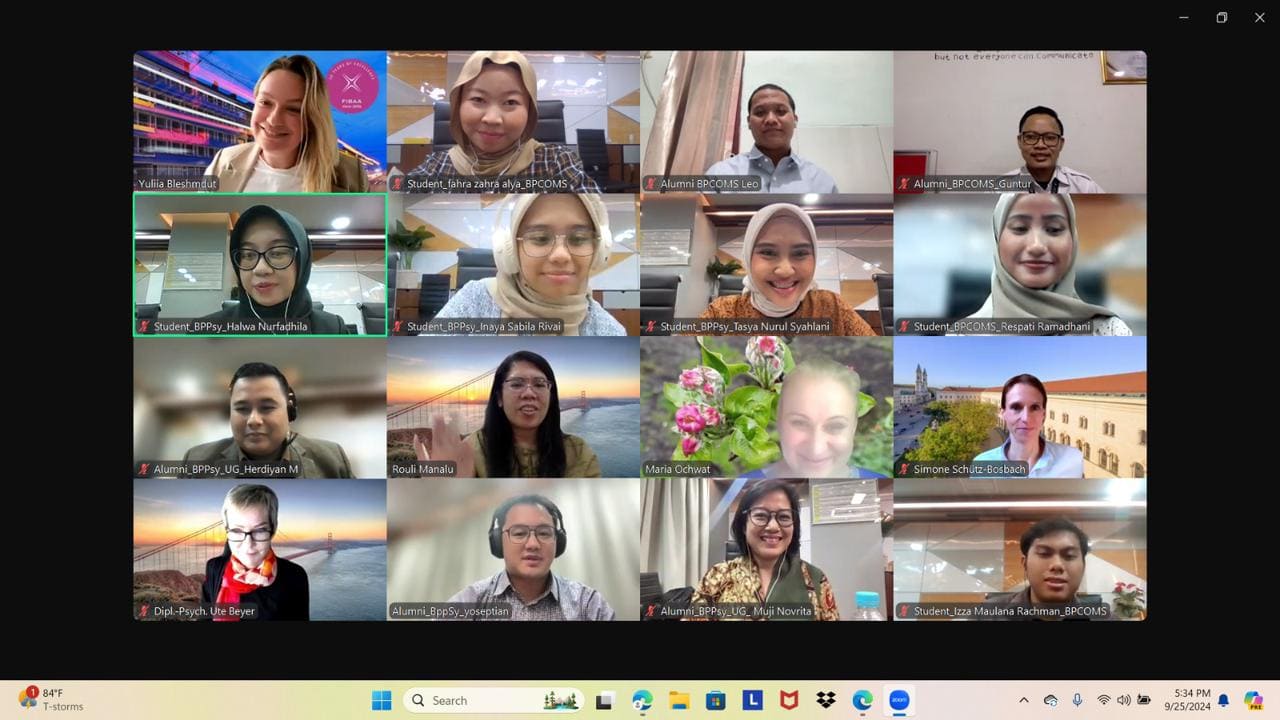
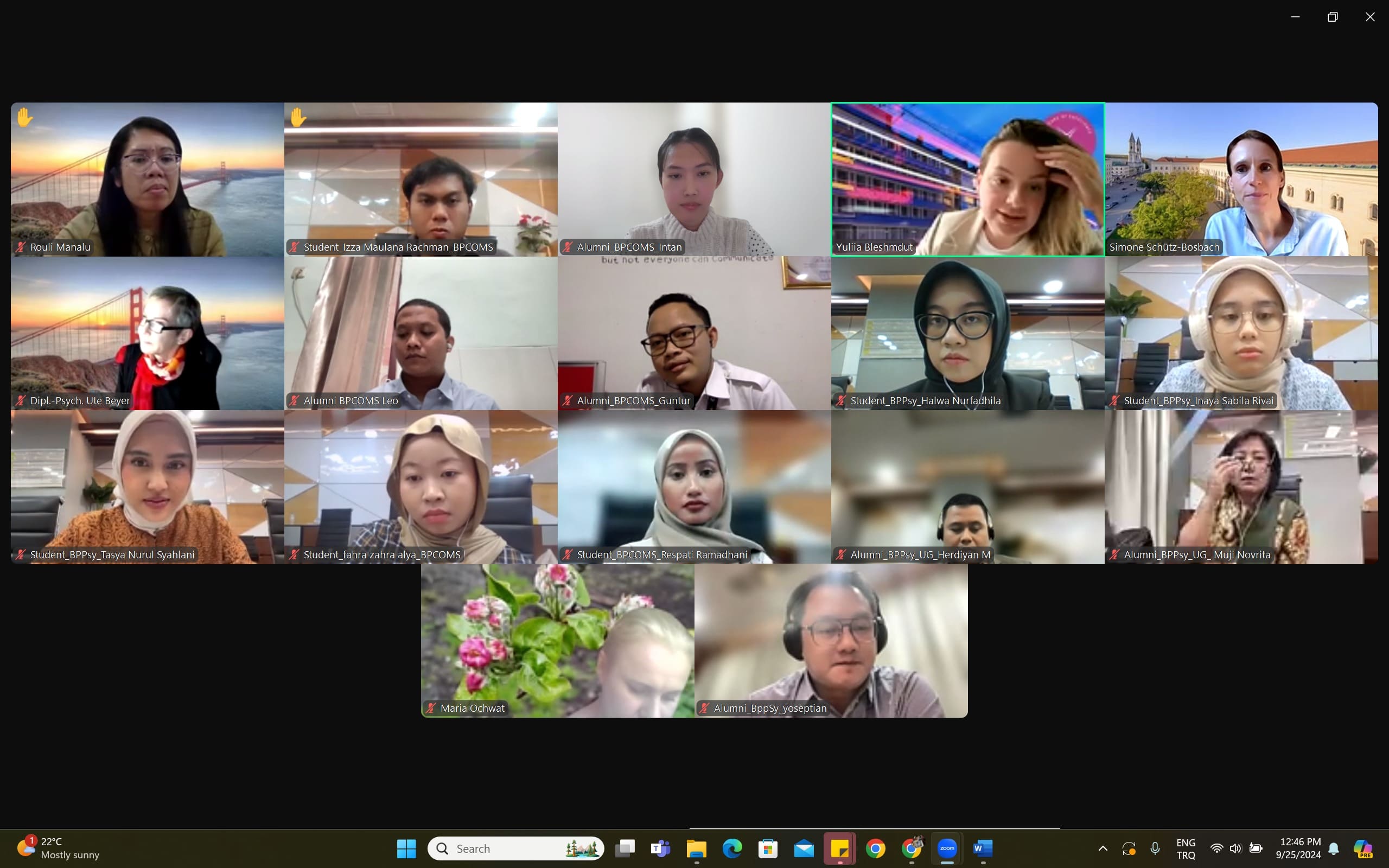
The visitation activities were conducted online and included discussions between the FIBAA expert panel and representatives from the university, study programs, lecturers, and students as a basis for assessment in various areas of higher education. These discussions covered topics related to the objectives and alignment of the curriculum with the job market, examinations and their implementation, as well as the internationalization of the academic program. They also addressed issues related to the academic process, such as the internal procedures and the workload for students, as well as the support provided by the university for all higher education activities, including the library, financial services, career center, and quality assurance body.
The representatives from the university who were directly involved in the visit were Prof. Dr. E.S. Margianti, SE, MM as Rector of Universitas Gunadarma, Dr.rer.nat. I Made Wiryana from the International Office of Universitas Gunadarma, Prof. Budi Hermana from the BAPSI department, Dr.rer. pol. Sudaryanto from the Quality Assurance Agency of the University, Dr. Renny from the Career Counseling/Career Center department, Dr. Rooswhan Budi Utomo from the University Library department, and Dr. Aviarini Indrati from the E-Learning department of Universitas Gunadarma.
From the Faculty of Psychology and the Psychology Undergraduate Program, attendees included Dr. Anita Zulkaida as Deputy Dean of Curriculum for the Faculty of Psychology, Dr. Sugiharti Binastuti as Deputy Dean of Finance for the Faculty of Psychology, Dr. M. Fakhrurozzi as the Deputy Dean of Student Affairs at the Faculty of Psychology, Dr. Ira Puspitawati as the Head of the Psychology Undergraduate Program, and Dr. Praesti Sedjo as the Secretary of the Psychology Undergraduate Program, and Sekar Ayuning Ati, S.Psi, M.Si., as the Program Coordinator of the Psychology Program.
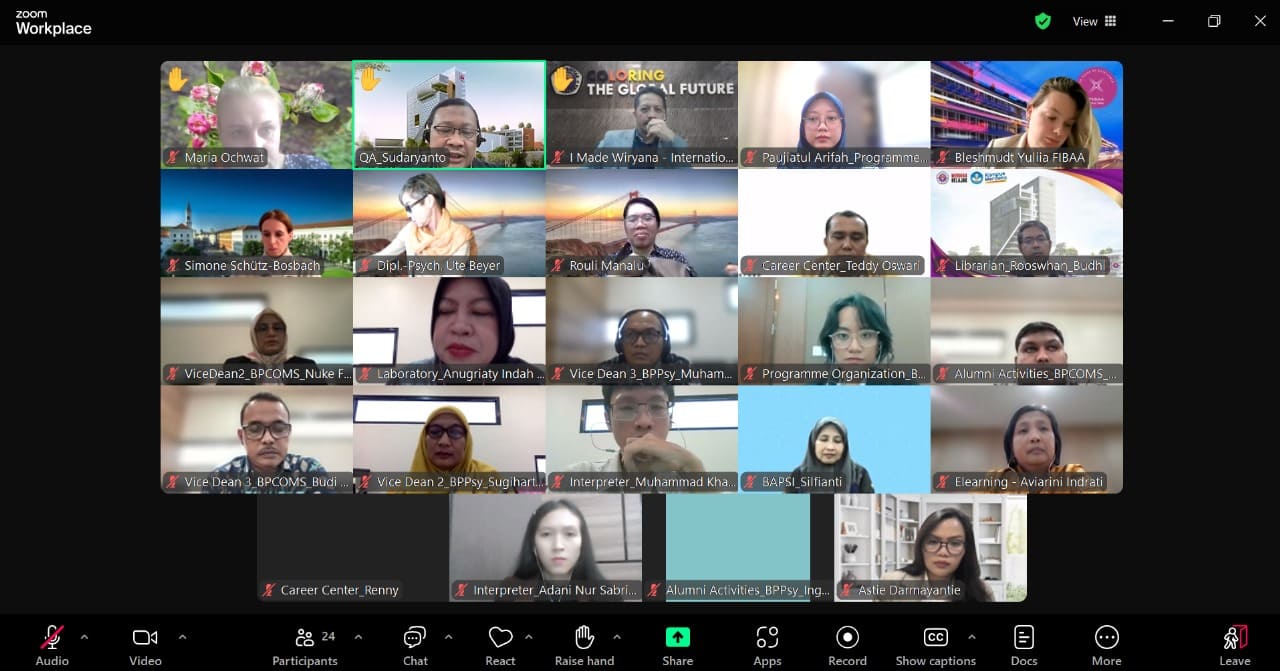
This online visit also involved lecturers teaching several courses, active students, and alumni from each study program. From the Psychology Undergraduate Program, the lecturers who participated in this online visitation were Dr. Matrissya Hermita, M.D., who teaches courses such as Physiological Psychology and Digital Citizenship, Dr. Wahyu Rahardjo, who teaches courses such as Instrument Construction, Quantitative Research Methodology, and Dr. Meta Damariyanti teaching courses such as Instrument Development and Projective Tests, as well as Intelligence Measurement Methods, Dr. Ratna Maharani Hapsari, teaching courses such as Cognitive Psychology and Cognitive Science Psychology, and Adi Sulaiman, S.Psi., M.Si, teaching courses such as Industrial and Organizational Psychology.
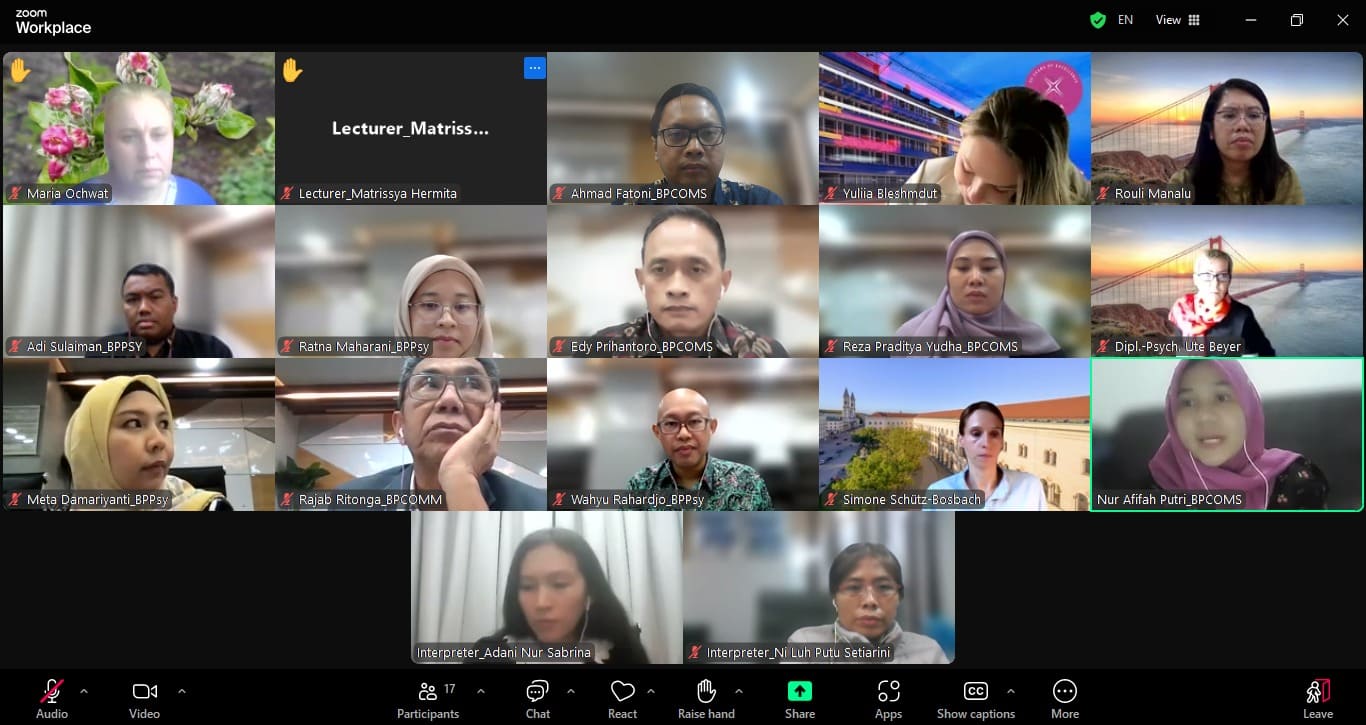
Meanwhile, the students from the Psychology Undergraduate Program who attended as student representatives in this online visit were Inaya Sabila Rivai, Tasya Syahlani, and Halwa Nurfadhila. Alumni were represented by F.X. Yoseptian Lee S.Psi, MBA, Muji Novrita, S.Psi. M.Si, and Herdiyan Maulana, S.Psi. PhD.
About FIBAA
FIBAA (Foundation for International Business Administration Accreditation) is an accreditation agency with a mission to support transparency and quality in the education sector, particularly at the undergraduate, master’s, and doctoral levels. FIBAA focuses on academic evaluation and content-based evaluation of study programs, particularly those leading to bachelor’s and master’s degrees, as well as institutional accreditation of higher education institutions in Germany and internationally.
FIBAA accreditation provides detailed information and feedback with objective evidence regarding the quality of study programs by evaluating five main areas, namely study program objectives, standards and procedures for accepting new students, content, structure and didactic concepts of study programs, academic environment and framework standards, as well as quality assurance, quality development and documentation of this assurance. In these areas, FIBAA places special emphasis on internationality, alignment with current labor market needs, and economic relevance.
With this international accreditation status, hopefully the Psychology and Communication Study Programs will continue to grow and remain relevant, both nationally and internationally. Additionally, this evaluation process is expected to serve as a foundation for us all to maintain what is already good, improve what is lacking, and encourage the development of various potentials within our academic community to become even better.